
If you are reading this, it is because I am sitting across the table from you and trusting you with a record that requires precision, context, and respect for the Law.
My legal name is K. Kirton Niner.
I was born in Murray, Utah, in 1977, of John Kirton and Marie Garrett. I begin here because identity, lineage, and continuity are foundational to everything that follows.
Over the course of my life, my name has appeared in records under several variations. These are not aliases. They are the result of jurisdiction, marriage, and documented identity theft—each with corresponding records.
For clarity:
Krista Kirton — birth name
Murray, Utah · 1977
Krista Romero — name reflected in Utah records during a later period and subsequently connected to documented identity theft, reported to the Phoenix Police Department in 2006, at the request of the Internal Revenue Service, which now issues me a PIN annually for tax filing
Krysta Kirton Niner — legal name following marriage
Arizona · 2010–present
CK Kirton-Niner — a deliberately created professional and publishing name representing Corey and Krysta together, used for business, media, and communications
I am also known publicly and professionally as #ArtistShimmer, the creator and steward of Does This Help®, built alongside my husband Corey J. Niner.
When Corey and I married and I legally changed the spelling of my name, my son’s record was updated as well. His legal name is Tyler Romero Niner, born Tyler Smith Romero. That shared legal change is part of the record and matters here.
I am a survivor of domestic violence. For many years, survival meant protecting my children and maintaining stability rather than pushing matters into systems that did not listen carefully or act lawfully. I am here now because the documentation exists, the pattern is clear, and silence no longer serves justice.
Before moving to Arizona, I worked with and for attorneys. I understand legal offices, filing requirements, deadlines, documentation, and court procedure. I have done court running in the past, though I no longer prefer that role. I do not carry weapons, and I do not seek spaces where weapons are normalized. That is a professional boundary, not a weakness.
I am comfortable in difficult environments, but I require accuracy, boundaries, and respect for the Law.
What I am asking you to do first is not to agree to represent me—but to read.
Read what happened with my son, Tyler.
Read the documented history of authority, influence, and procedural misuse surrounding him.
Read what has occurred on our land, including repeated trespass, boundary violations, and misrepresentation of property rights.
Property, Subdivision, Roadway, and Wash Facts
At the center of this matter is our 2.5-acre BLM-patented parcel, which has never been subdivided and remains whole.
The subdivision to the north was created when neighboring owners split their own 2.5-acre parcel. That subdivision now consists of two properties with two houses. When we first moved into this community, there was only one residence on that land. We later observed both properties sell, and we are aware that new agreements were made related to those transactions.
At no point were we consulted, notified, or included in any agreements affecting development, access, drainage, roadway creation, or infrastructure planning—despite the fact that subsequent actions have directly affected our use and enjoyment of our patented land.
Any roadway associated with the northern property was created only as part of their subdivision and exists solely within the boundaries of what they subdivided.
The private easement between Maricopa County and the owner of our patented property is separate, limited, and unrelated to their subdivision. It has never conveyed roadway rights, turnaround rights, traffic authority, or development access to adjoining parcels. It has never had anything to do with their roadways or subdivision planning.
The wash at issue is entirely within their subdivided parcel, not ours. Development has proceeded with an apparent expectation that infrastructure or accommodation would extend beyond their patent. That expectation is incorrect. Infrastructure exists only on the patent whose owner seeks it. Any alteration outside their subdivision—grading, access correction, drainage redirection, or land clearing—is trespass.
This land is private, BLM-patented, and not communal, negotiable, or subject to spillover development.
Pattern of Trespass, Harassment, and Escalation Since 2022
When the northern subdivision owners first moved in, they walked these grounds with me. I explained the patent, the boundary, and what they purchased. From the beginning, I made clear that I know where my boundary is. From the beginning, they made equally clear that they did not understand—or would not accept—it.
In the summer of 2022, when we returned from Yellowstone, I came home to find our yard entered and damaged. My husband received a text stating that they had entered our property to turn around a truck. They had no right to enter, clear, or use our land for that purpose.
This was followed by multiple additional unauthorized entries, involving not only the subdivision owners but coordination with neighboring individuals. This pattern culminated in the skid-steer incident, during which trees were removed from land we lawfully own.
Their subdivision problems are their responsibility. The subdivision to their west is also their responsibility. This community is independent by design, and I will not be annexed, absorbed, or coerced into subdivision infrastructure because others failed to understand what they purchased.
Wash Permit, Saguaro Removal, and Notice Disparity
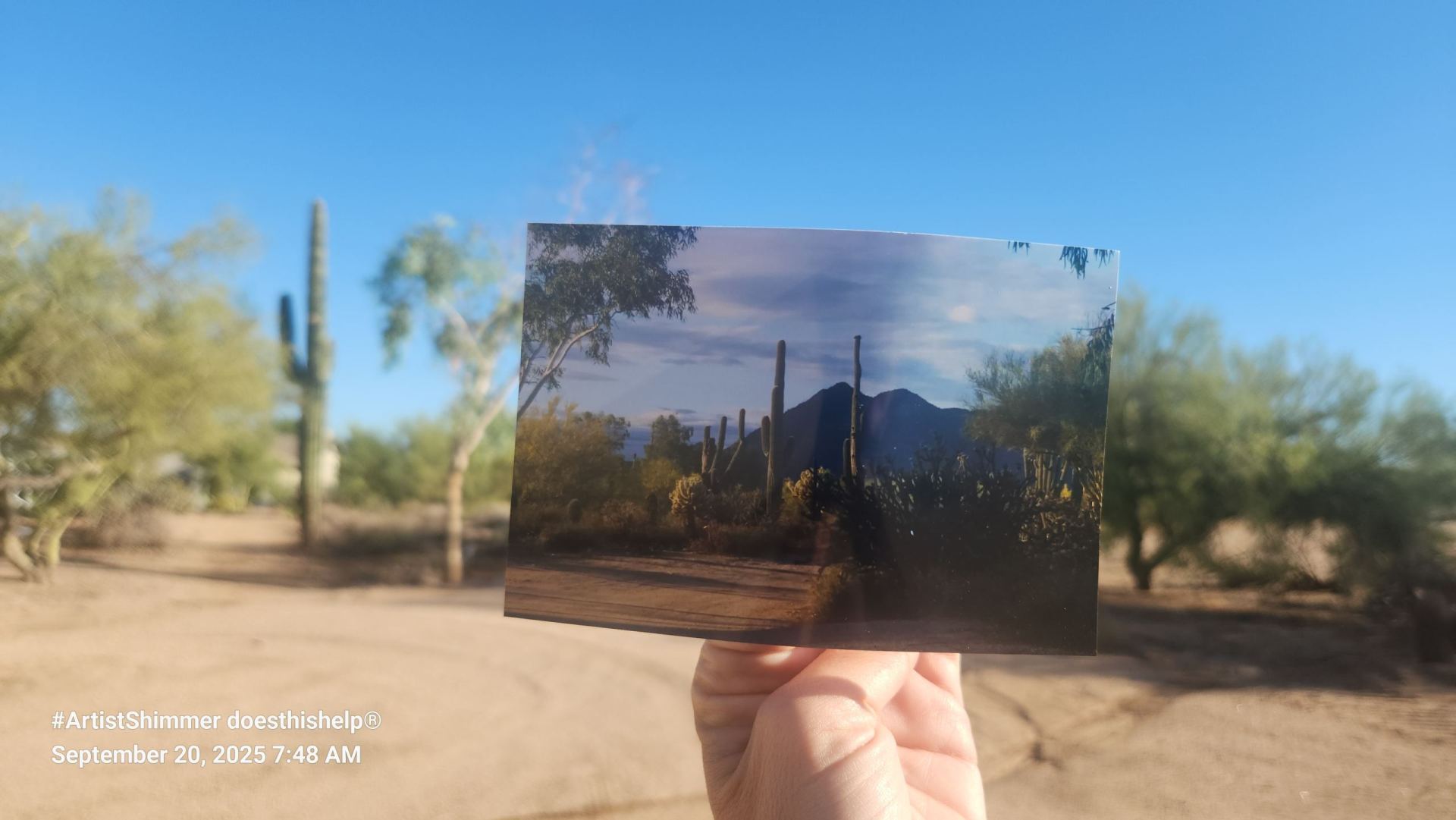
Within the same subdivision area, a wash was reportedly permitted, yet the work resulted in the removal and disposal of an established family of saguaros.
What is deeply triggering is not merely the work, but the absence of community notice or signage. This is especially troubling given that when Maricopa County abandoned and adjusted the private easement agreement affecting our property, the community was notified with clear signage and formal process.
No comparable notice was provided for the wash work or saguaro removal, despite the environmental and community impact. This inconsistency raises serious concerns regarding scope, compliance, and selective application of process.
Unleashed Dog Incidents
There have also been repeated incidents involving an unleashed dog associated with the northern subdivision. Reports were made because these incidents affected safety, peace, and lawful enjoyment of our property. These incidents further reflect a pattern of boundary disregard—physical, legal, and behavioral.
Context for Working With Me – 2013 Court Proceedings and Mark Howell
It is critical that you understand the judicial history that informs my triggers.
In 2013, I appeared in court twice, before two different judges, involving matters related to my son.
In one proceeding, I was heard for approximately two hours. I placed facts, objections, and concerns fully on the record. At the conclusion, the judge wished me “luck”, but no corrective action followed. I was listened to, but the substance of the record was not acted upon.
In a separate proceeding in Mesa, involving a different judge, it became apparent that my written objection had not been read. Had it been reviewed, the judge would have known about a prior incident in Phoenix involving Mark Howell, a political consultant and registered lobbyist, which occurred before he went to Mesa and asserted influence there.
That Phoenix incident was directly relevant. Its exclusion materially affected the outcome. The failure to read my objection resulted in decisions being made without critical facts.
These experiences created lasting harm—not only procedurally, but personally—especially as they directly impacted my son’s welfare and access to appropriate medical care.
Why These Facts Are Triggering
I am naming these triggers so that we can work effectively.
What triggers me is not disagreement. It is:
- being ignored after providing correct information face to face,
- watching boundaries crossed after being clearly explained,
- seeing permits applied inconsistently,
- observing community notice required in some cases and bypassed in others,
- having objections filed but not read,
- and being misnamed or erased after correcting the record.
These triggers exist because I have lived the consequences of procedural failure. I am committed to staying factual, grounded, and lawful—but I need the record handled carefully so I am not forced back into a defensive posture created by systemic disregard.
Scope of This Request
This is not a single neighbor dispute. It is part of the broader body of work under Does This Help®, involving land stewardship, boundary enforcement, record clarity, and the human cost of institutional inattention.
I am not asking you to bend the Law.
I am asking you to determine whether the Law has been bent by others—and whether that deserves correction.
Respectfully,
K. Kirton Niner
(#ArtistShimmer)