
CREEKER Consumer Report
Before You Buy, Split or Develop Desert Property, Know Where Your Rights—and Your Development—End
Rancho del Oro | Unincorporated Maricopa County, Arizona | October 1, 2026
There is an important lesson coming out of Rancho del Oro for anyone buying property in unincorporated Maricopa County:
Your property is yours to develop. Your neighbor’s property is not part of your development plan.
When neighboring acreage is split, developed, graded or built upon, the development decisions made on that land can have consequences beyond its property lines—particularly when those decisions involve historic washes, drainage, roadways and access.
That is where this story begins.
Two properties do not become one development site
At Rancho del Oro, our 2.5-acre property is separate private property. The neighboring 2.5 acres were subsequently split and developed.
Our position is straightforward: development of those neighboring parcels should have been planned around their own boundaries, their own lawful access, their own easements and the historic drainage conditions affecting their land.
Instead, we contend that development to the north altered the physical landscape and historic wash and changed conditions affecting our property. We are also now defendants in a prescriptive-easement lawsuit concerning claimed access across our property.
Those claims remain matters for the courts and the evidence. But the underlying consumer issue is much larger than our individual dispute.
Water doesn’t recognize a property line—but development regulations do recognize neighboring property
Maricopa County expressly regulates drainage throughout its unincorporated territory. According to the County, its regulations apply to development and other conditions that may affect drainage systems and patterns.
Most importantly, the County says its Planning and Development Department coordinates regulation so that new development does not increase runoff, divert flows or back water onto other properties. (Maricopa County)
The County’s Drainage Policies and Standards go further.
They state that historic drainage patterns—meaning where runoff enters and exits a property—shall be maintained. They also recognize that development can realign natural flow paths, increase runoff volume or velocity, and otherwise create adverse effects on neighboring property and natural areas that must be mitigated. (Maricopa County)
That matters tremendously in the Sonoran Desert.
A natural wash isn’t simply empty ground waiting for somebody to move it. It carries stormwater according to the topography that existed before houses, pads, landscaping and driveways were constructed.
Our concern at Rancho del Oro
Our allegation is that development north of our property changed that landscape and the wash from which water ultimately enters our private 2.5 acres.
Our concern is not that water naturally crosses property boundaries. It always has.
The question is whether development changed how, where, how much, or how forcefully that water reaches the adjoining property.
That distinction is critical.
Maricopa County’s current Zoning Ordinance states that where established drainage infrastructure does not exist, drainage patterns must remain historic with respect to the locations and characteristics of inflow and outflow. It also says retained runoff discharged from a site cannot exceed pre-development flows and must follow the historic location and direction. (Environmental Services)
That provides an objective standard against which the history can be examined.
The road is a separate—but connected—issue
The property also has a longstanding roadway/easement history.
We contend that a 33-foot roadway easement dating to approximately the 1950s exists in the area associated with the neighboring property and that today’s physical landscape—including relocated or newly placed desert vegetation—does not erase the recorded history of the land.
The precise legal effect of the documents must be determined from the actual deeds, patents, surveys and recorded easements.
Maricopa County itself explains that many unincorporated parcels originating from federal Small Tract Act conveyances contain patent easements established as corridors for access and utilities. The County also cautions that it does not resolve private disputes between landowners concerning contested use of patent easements. (Maricopa County)
Likewise, Planning and Development states that private ingress-and-egress easement conflicts are civil matters. (Maricopa DOT)
And that distinction is enormously important:
A County-issued building permit is not a judicial determination of private access rights.
So where was the protection before construction?
That is the consumer question Rancho del Oro raises.
If development requires grading, changing drainage, establishing roads and determining access, how thoroughly are the consequences for adjoining properties being examined before permits are released and construction permanently changes the land?
Current County policy says new residential permits requiring drainage clearance are reviewed by the Drainage Plan Review Division, with County drainage staff determining when engineered plans are necessary. (Maricopa DOT)
The County also says all new private roads in unincorporated Maricopa County require a permit, including dirt roads. It specifically explains that permits are required when new roads are graded to ensure historic drainage patterns are maintained. Even maintenance of an existing dirt road can require corrective permitting if the work changes historic drainage. (Maricopa County Emergencies)
These protections matter only when the conditions being reviewed accurately reflect what exists on the ground and what development ultimately does to it.
A permit should never become somebody else’s property right
This is perhaps the most important lesson for consumers.
Purchasing property does not automatically give the purchaser whatever access arrangement would make developing that property easiest.
Splitting acreage doesn’t make adjoining acreage part of the resulting development.
Building a house doesn’t create ownership of the neighboring property.
And receiving governmental permission to construct something does not, by itself, establish a private easement over somebody else’s land.
Those property rights have their own legal origins and must be determined from the applicable deeds, patents, easements, surveys, historical use and, when disputed, the courts.
Before purchasing unincorporated property, investigate the land—not just the house
A consumer considering unincorporated property should know much more than the square footage of the house and the acreage advertised on the listing.
Find the survey. Read the legal description. Examine the title report. Locate every recorded roadway and easement. Determine whether a federal patent affects the property. Identify where legal access actually exists. Examine historical aerial imagery. Understand where washes historically entered and exited the parcel. Obtain the parcel-split documents and existing grading and drainage records.
Most importantly, ask:
Can this property function as its own property without requiring an adjoining owner to surrender land, accept newly redirected drainage, or provide an access right that isn’t already established?
That question should be answered before closing and before construction, not years afterward in litigation.
The surviving saguaro
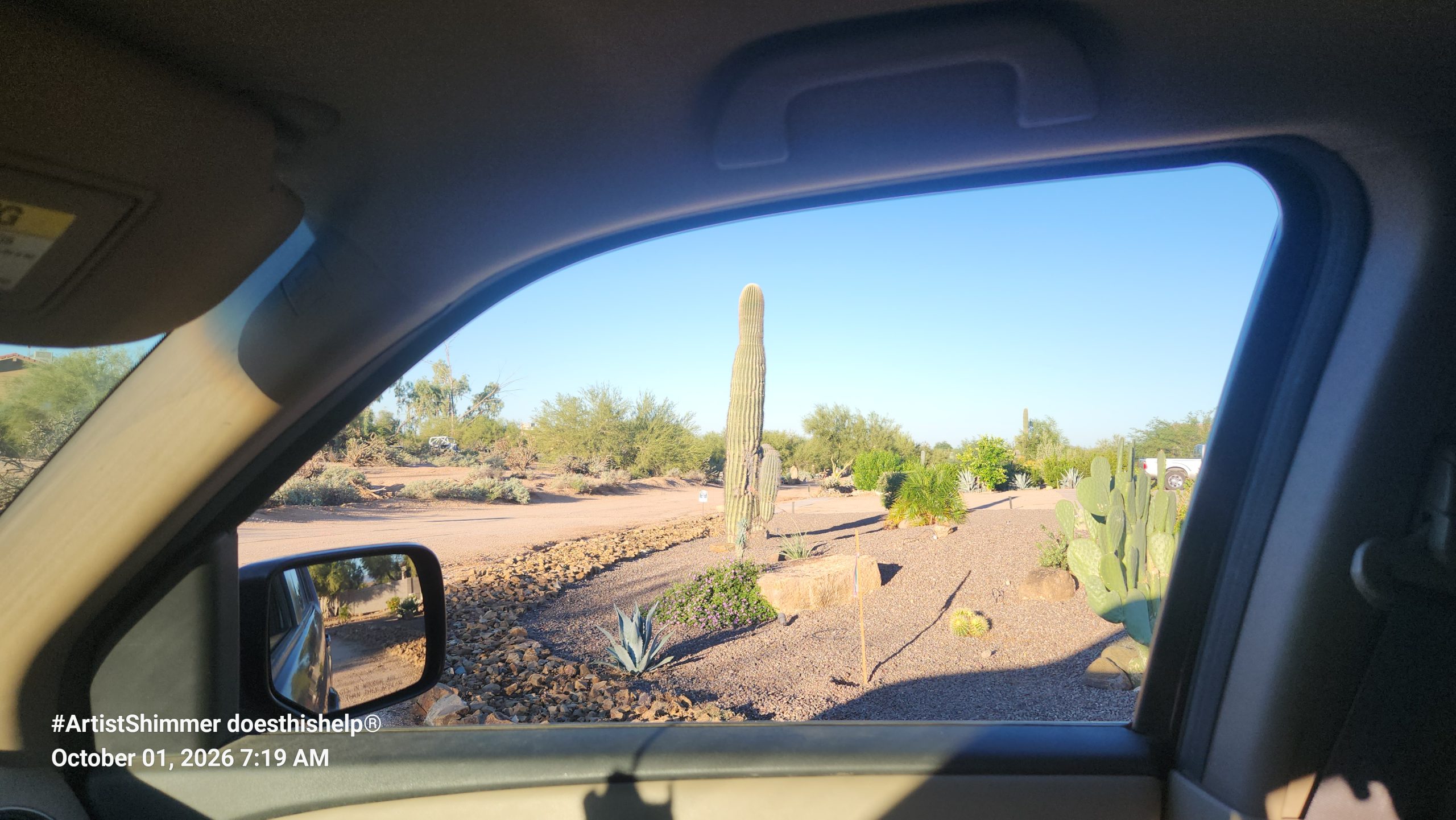
And that brings the story back to the saguaro photographed at Rancho del Oro on the morning of October 1, 2026.
To someone passing by, it may simply look like another beautiful Arizona cactus standing beside a landscaped desert property.
To us, it marks a much longer history: a natural desert landscape, a wash, neighboring development, disappearing saguaros, changed ground, questions about an old roadway corridor, changing drainage conditions and ultimately a lawsuit over access.
The cactus cannot tell us what the legal boundaries are.
Neither can the driveway.
Neither can today’s landscaping.
The records can.
That is why consumers buying unincorporated Arizona land should understand one principle before anything is graded, planted, divided or built:
Develop what you own. Respect what your neighbor owns. Preserve historic drainage. Establish your lawful access before you build. And never assume a permit gives you rights over somebody else’s property.
That isn’t anti-development.
That is responsible development.
CREEKER Consumer Report | Does This Help® | Rancho del Oro | October 1, 2026
Leave a Reply