
What consumers of unincorporated property should understand before development destroys what cannot simply be replaced
Rancho del Oro · Unincorporated Maricopa County, Arizona · October 1, 2026
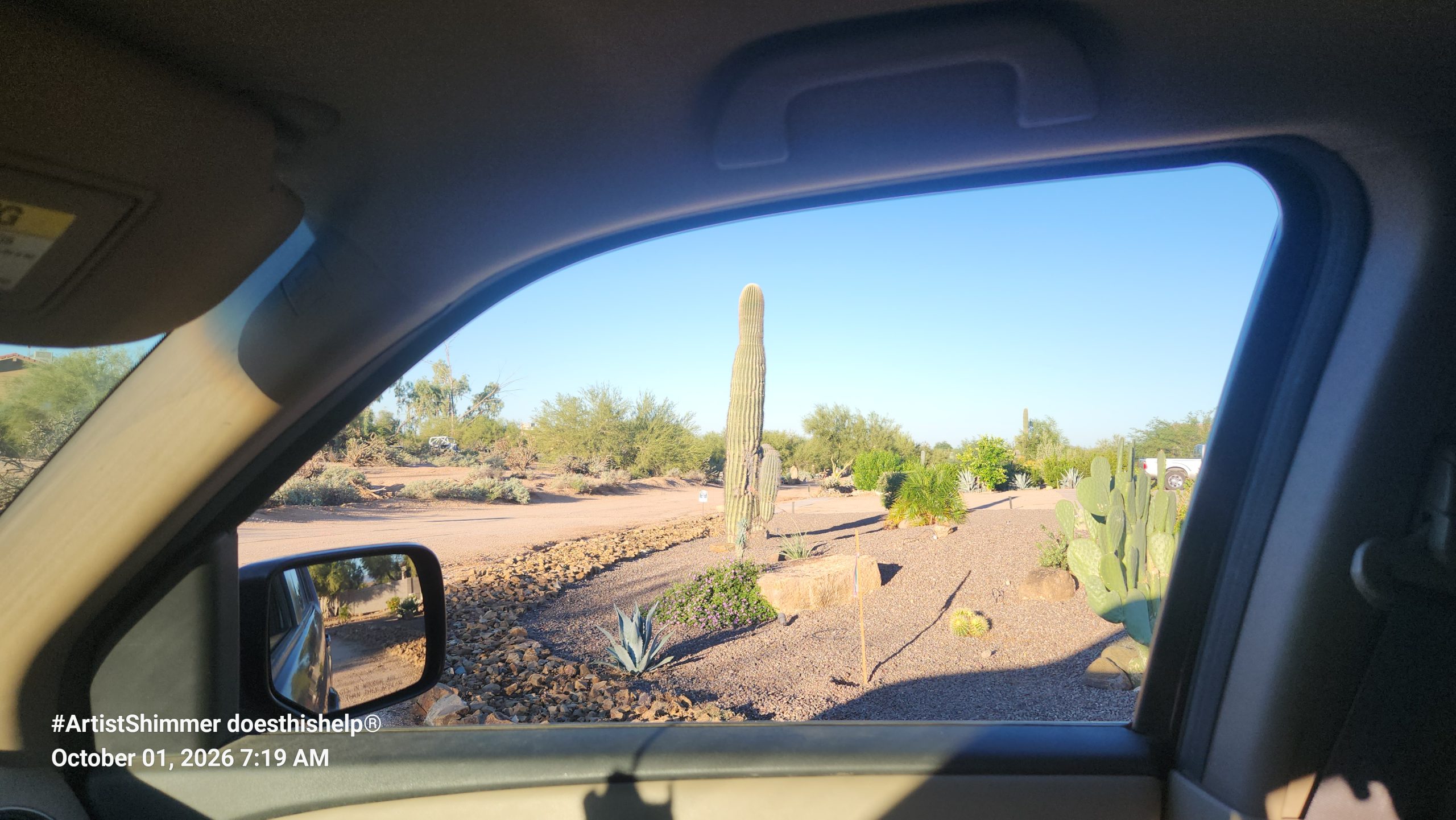
Look at the saguaro.
It is still standing.
But according to our firsthand account of what happened at Rancho del Oro, the saguaro family that once shared this Sonoran Desert landscape with it is gone.
Approximately five to six years ago, neighboring acreage was being prepared for new residential development. We watched the desert change. We watched the natural wash be disturbed. We watched the landscape that had existed beside our 2.5 acres disappear.
And we watched the saguaros disappear with it.
We call them the murdered saguaro family.
“Murdered” is our expression for the destruction and loss of living desert that we witnessed. The precise circumstances surrounding the removal or destruction of individual saguaros should be established from photographs, permits, native-plant records and other evidence.
But the loss itself is why the survivor matters.
THE SURVIVOR
The saguaro photographed here on October 1, 2026 is more than landscaping to us.
It is evidence of what this corner once was.
It stands among houses, grading, roads and landscaping that came afterward.
And it stands waiting for something its lost family cannot ask for:
Restitution.
Not simply money.
Restitution means accounting for what happened.
What saguaros existed before development?
Which were removed?
Which were destroyed?
Which were relocated?
What happened to the natural wash?
What did the land look like before grading?
Where did stormwater historically travel?
What plans were submitted?
What did Maricopa County approve?
And what actually happened on the ground?
Those are questions that photographs, aerial imagery, surveys, permits, grading plans, drainage records and other documents can answer.
YOUR DEVELOPMENT DOES NOT MAKE THE NEIGHBOR’S LAND YOUR DEVELOPMENT SITE
The neighboring 2.5 acres were theirs to develop.
Our 2.5 acres were not.
That distinction is fundamental to responsible ownership of unincorporated property.
A property owner can develop property subject to applicable law, easements, permits and regulations. But development can have consequences beyond the property line—particularly when grading changes a natural drainage system.
Maricopa County says its drainage regulations apply to development throughout unincorporated areas and are administered so new development does not increase runoff, divert flows or back water onto other properties.
The County’s Drainage Policies and Standards Manual is even more specific: historic locations where runoff enters and exits property are to be maintained, and activities affecting drainage are not to adversely impact adjacent properties. The County recognizes that development can realign natural flow paths and increase runoff, discharge, water elevations or velocities.
That is exactly why a natural desert wash matters.
THE WASH WAS ALREADY DOING ITS JOB
Before houses, grading equipment, driveways and landscaped yards, the Sonoran Desert already had a drainage system.
The wash.
Our concern at Rancho del Oro is not that rainwater naturally travels from one property to another. Natural drainage existed before the current development.
Our concern is that neighboring development allegedly changed the wash and the conditions under which water leaves the developed property and enters our privately owned natural-desert acreage.
That is a factual question capable of investigation.
County zoning requirements state that grading and drainage plans must preserve entrance and exit points and the continuity of natural drainage ways, while drainage facilities are supposed to maintain historic drainage patterns or convey runoff to an approved drainage way.
So consumers should understand the difference:
Receiving permission to develop your property is not permission to make somebody else’s property absorb the consequences of improperly planned development.
THEN THERE IS THE ROAD
The saguaro survivor also stands within an area we contend has a longstanding 33-foot roadway easement dating approximately to the 1950s.
The legal character and extent of that easement must ultimately be established by the applicable recorded documents, surveys, deeds and other evidence.
But today’s landscaping cannot, by itself, tell you yesterday’s property rights.
Neither can a cactus.
Neither can a driveway.
Neither can somebody simply deciding where they would prefer to travel.
Maricopa County says all new private roads in unincorporated areas require permits and specifically explains that grading a new road requires review to ensure historic drainage patterns are maintained. The County also warns that road work affecting historic drainage can require corrective permitting.
Yet we now find ourselves defendants in a prescriptive-easement lawsuit concerning claimed access involving our property.
That lawsuit will be determined by evidence and law.
But it raises an important consumer question:
Before developing a property, shouldn’t the purchaser know where that property’s lawful access actually is?
A BUILDING PERMIT IS NOT AN EASEMENT
Consumers need to understand this distinction.
A building permit does not itself convey ownership of neighboring land.
A building permit does not itself create an easement across neighboring land.
A building permit does not rewrite a deed.
A building permit does not move a property boundary.
And landscaping something today does not erase the recorded history underneath it.
Unincorporated property requires consumers to investigate these issues carefully before purchasing and before building.
Find the survey.
Read the title report.
Read the easements.
Investigate the parcel split.
Find the historic aerial photographs.
Understand the drainage.
Locate the natural washes.
Determine where lawful access exists.
And ask whether the proposed development can function on the property being purchased without requiring another owner’s private land to solve an access or drainage problem.
AND DON’T FORGET WHAT WAS ALREADY LIVING THERE
Property development isn’t only about lines drawn on plans.
There was a desert here first.
There were washes here first.
And there were saguaros here first.
That is why this surviving saguaro has become the symbol of our story.
When we look at it, we remember the saguaros that once stood around it.
We remember the natural Sonoran Desert.
We remember the wash.
We remember what this corner looked like before development changed it.
And we are preserving the evidence so that history cannot simply disappear with the landscape.
THE CONSUMER LESSON FROM RANCHO DEL ORO
When you purchase unincorporated property, buy what you are actually buying—not what you assume the neighboring property will provide.
Develop what you own.
Know your lawful access before you build.
Respect recorded easements.
Preserve historic drainage.
Understand the natural washes.
Consider the neighboring properties that development can affect.
And remember that an undeveloped piece of Sonoran Desert is not empty simply because somebody hasn’t built a house on it.
It is land.
It is habitat.
It is drainage.
It is history.
And sometimes it is home to a saguaro family that took generations to grow.
At Rancho del Oro, most of that family is gone.
But one survivor remains.
**Standing.
Remembering.
Witnessing.
Waiting for restitution.**
For the murdered saguaro family of Rancho del Oro.
CREEKER Consumer Report · Does This Help® · October 1, 2026

Leave a Reply